


Testing Seed Viability
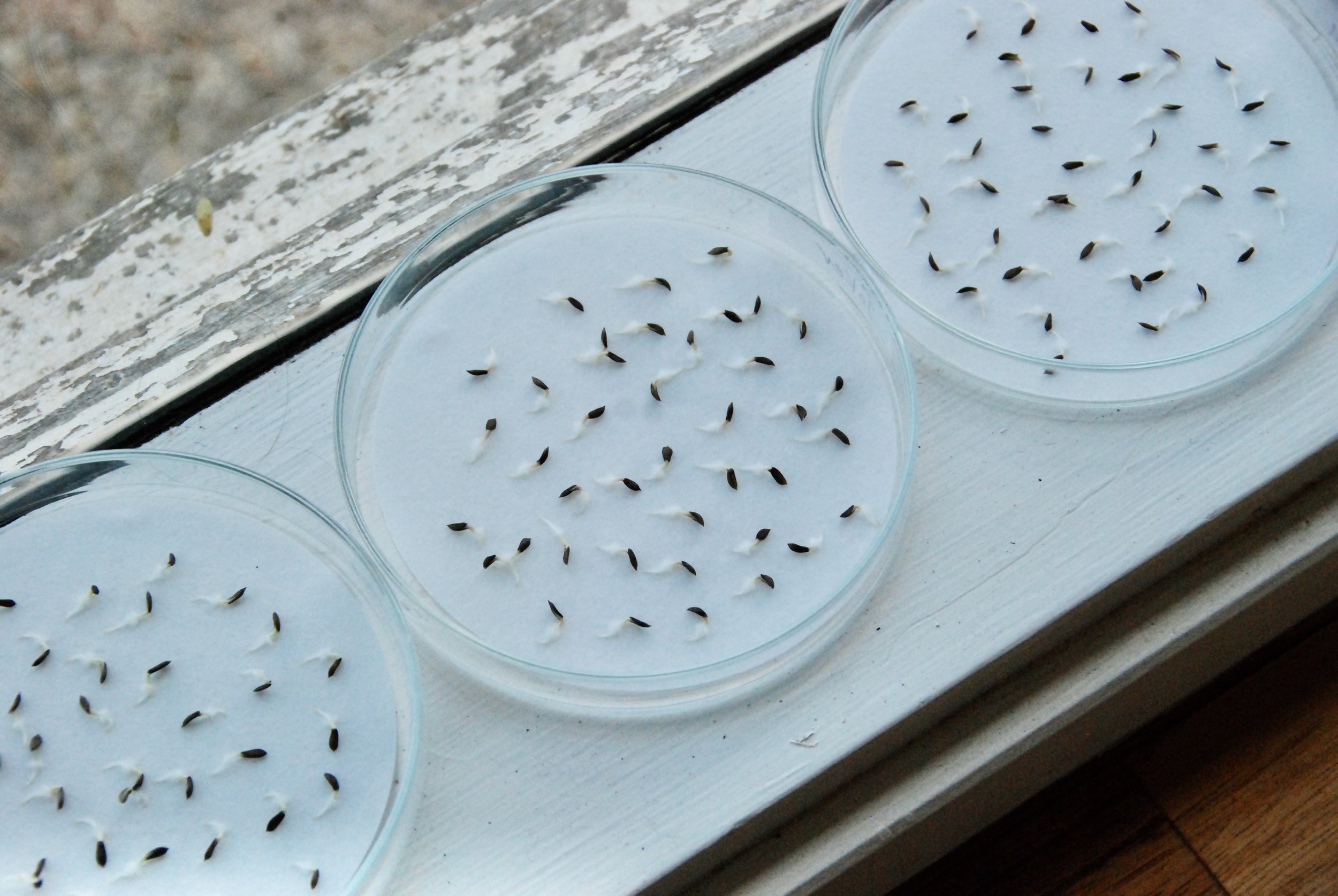 Winter and the beginning of Summer (ahead of sowing Autumn/Winter Crops) are great times to pull out your seed stash and test the viability of your seed. Running germination tests not only ensures you do not waste time, energy, space and resources sowing seed that is no longer good, it also keeps your planting schedule on track.
WHEN TO TEST SEED
If you have seed that you are hoping to carry over from last season, it is always a good idea to sacrifice a few to a germination test.
If you stored your seed correctly, you may be able to rely on the germination test on the packet BUT as soon as seed is opened or the temperature fluctuated where the seed was stored, the seed life can be adversely effected.
As space and scheduling were incredibly important to us as market growers, we chose to follow a simple rule, “WHEN IN DOUBT, TEST IT!”
 SIMPLE AND QUICK GERMINATION TEST
One of the simplest ways to test germination is using a paper towel, blotter paper or a coffee filter.
- Use a double thickness paper towel, blotter paper or coffee filter
- Label a piece of masking tape a with the variety and/or lot number and the number of seeds you are testing (to later calculate the germination rate)
- Lay a selection of the seed on the paper towel
- Gently mist so that the paper towel and seed is thoroughly moist but not dripping wet
For light-requiring seed:
- Place into a clear takeaway container and cover with the clear lid to maintain humidity.
For seed requiring darkness:
- Cover with another moistened paper towel and roll into a loose “sausage”, or cover with a bowl.
- Place into a plastic bag to maintain humidity, but do not completely seal, as seeds require oxygen.
- Place the seeds where the optimum germination temperature for that variety can be maintained. This may be a cool room in your house, above the refrigerator, or on a sunny windowsill.
- Check seeds every day or two to ensure the paper towel remains moist throughout the test period—this is especially important if the seeds are kept somewhere warm or in direct sunlight.
On average, a temperature of 22C should yield results on most things from 3-14 days. Many seed packets will list the optimum germination temperature
Calculating the Germination Rate
You are looking for roots and shoots!
You can count and remove those seeds that have germinated and continue your test.
Make sure you write down your results though. We are looking for uniformity, so once the seeds start germinating we give them a maximum of five days more before ending the test.
Germination Rate
(Number of seeds sprouted X 100) / Total number of seeds tested = Germination rate %
- IE - Started with 25 seeds
- 23 seeds germinate
- (23*100)/25 = 92%
If your germination rate is less than 60%, consider buying new seeds or sowing your seeds extra thickly to compensate for the low germination rate.

HELPFUL TIP
Use our OPTIMUM GERMINATION GUIDE for information about the optimum temperature and light for many varieties. It also includes the average number of days a variety should take to germinate - so you know when to finish your test.