

Tomato 'Black Beauty'
Tomato 'Black Beauty'
Couldn't load pickup availability
 Solanum lycopersicum
- Incredible dark, meaty, richly savoury flavoured tomato
- Chef favourite!
- Great fruit set in cool spring conditions
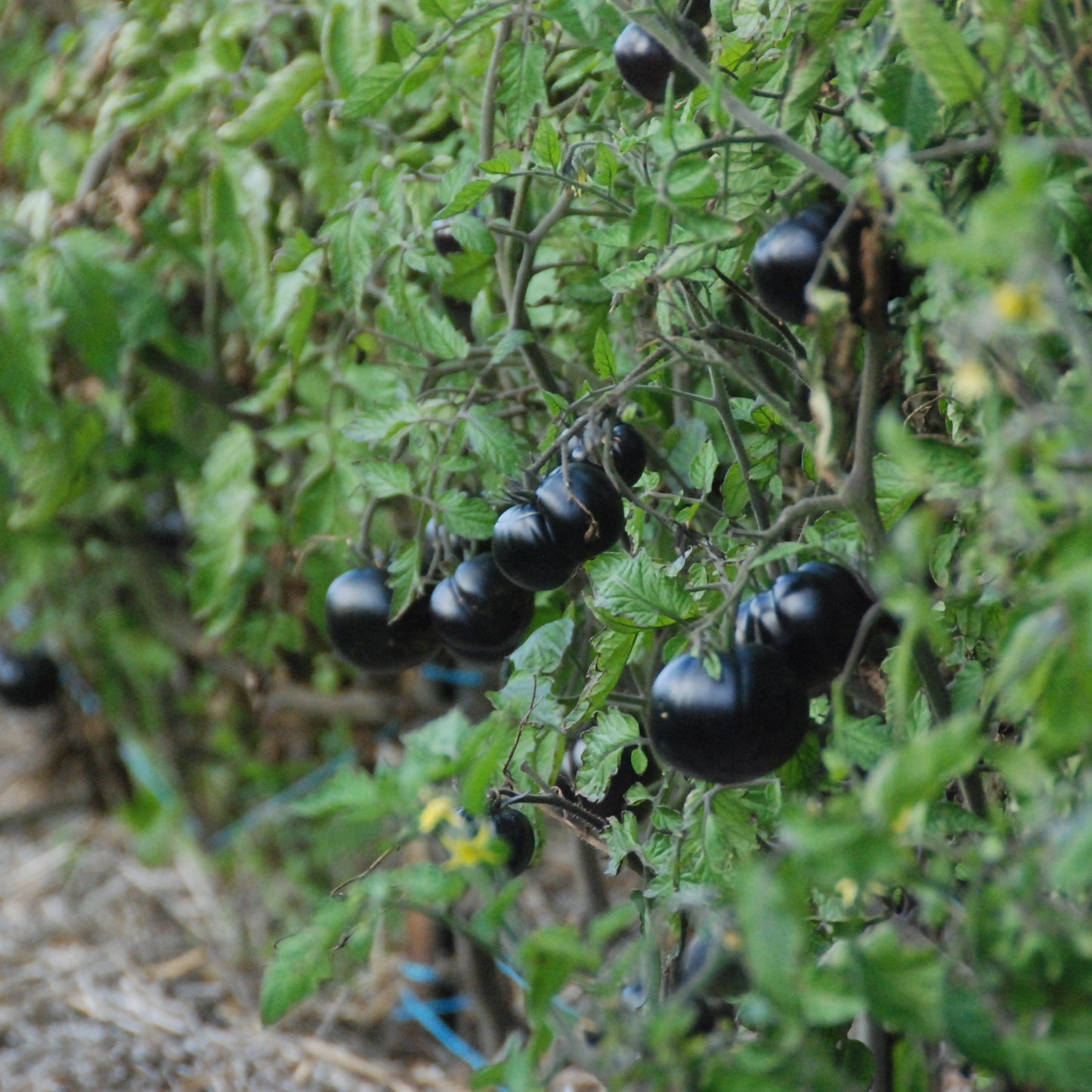
- Mid-season, Indeterminant with heavy yields
- Disease resilience into Autumn
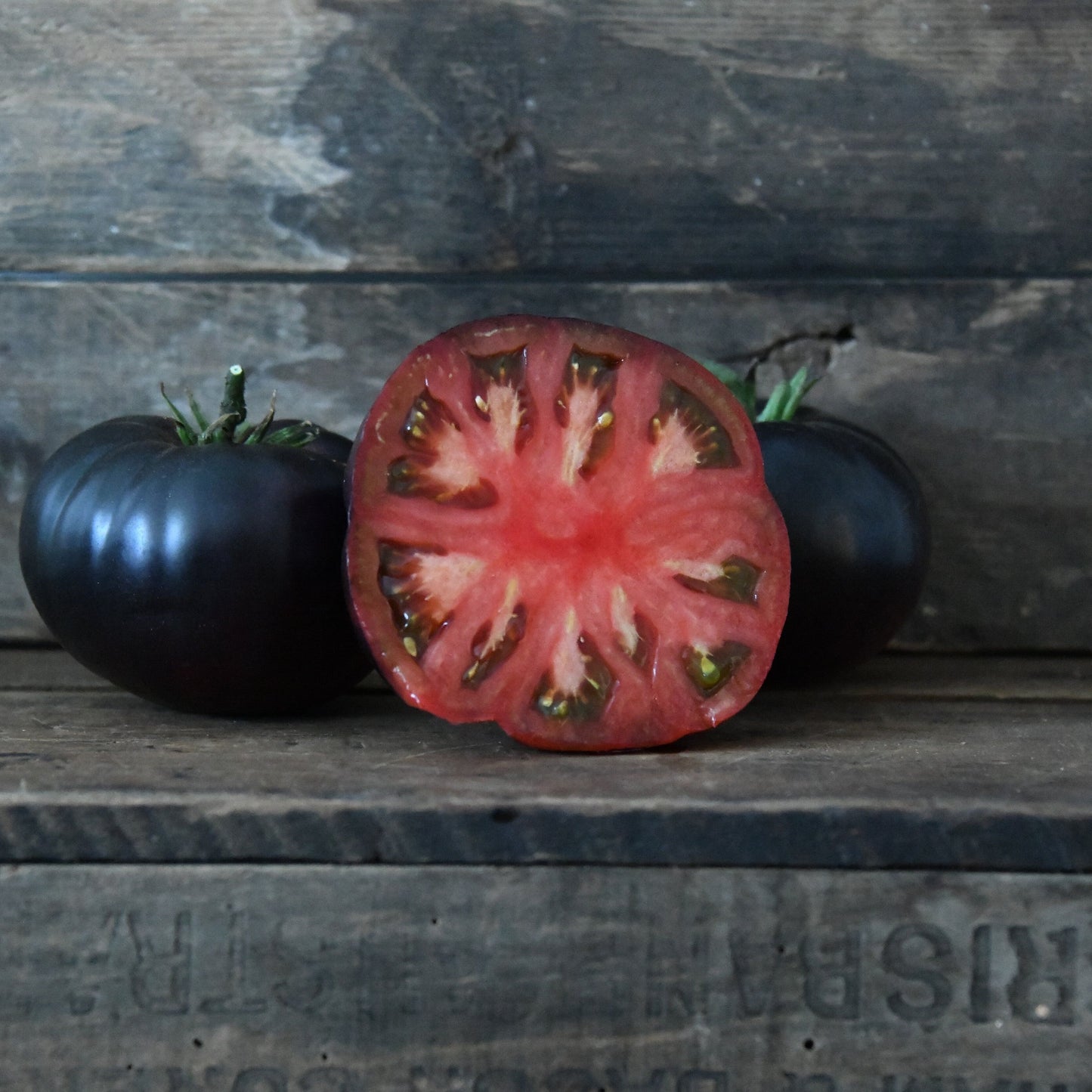
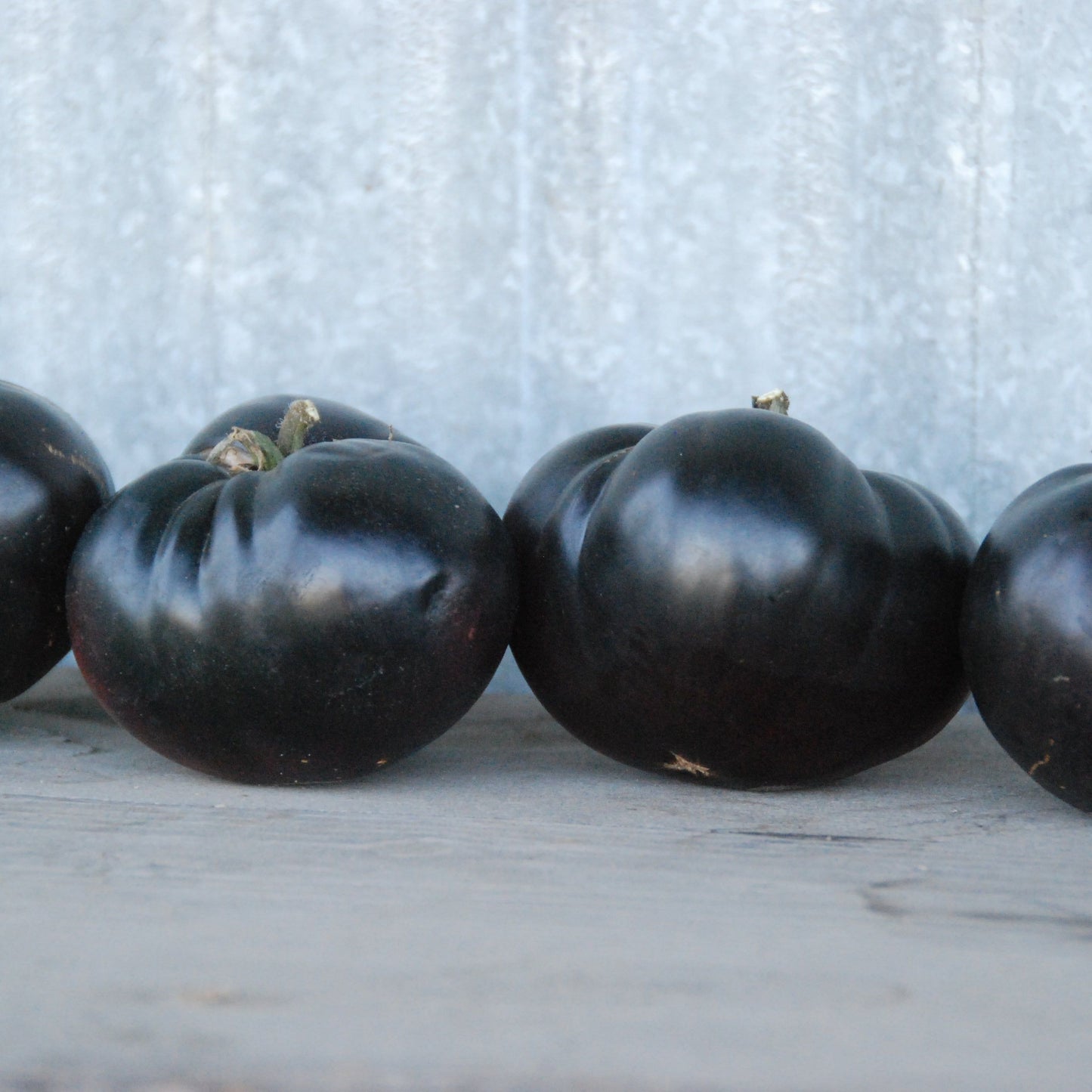
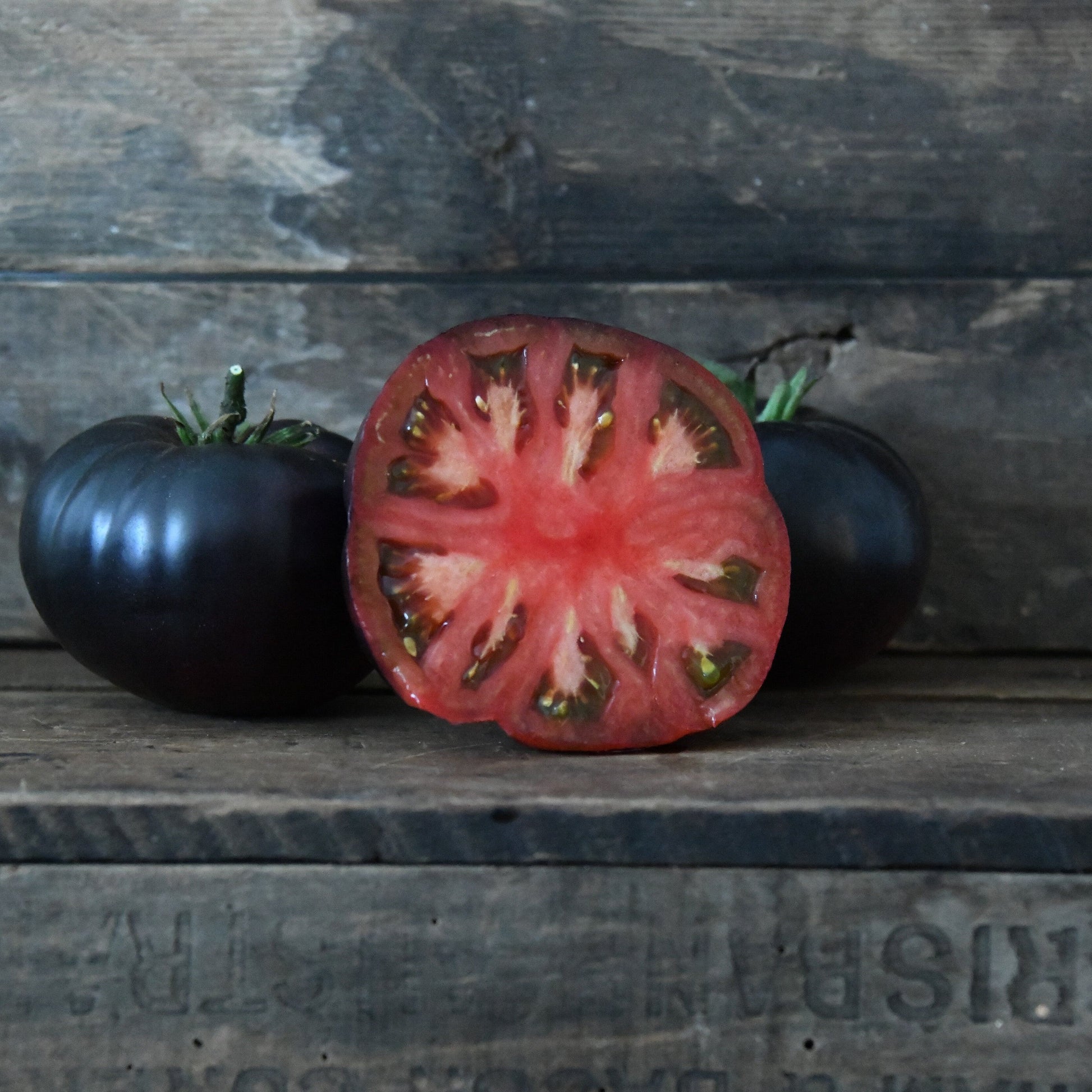
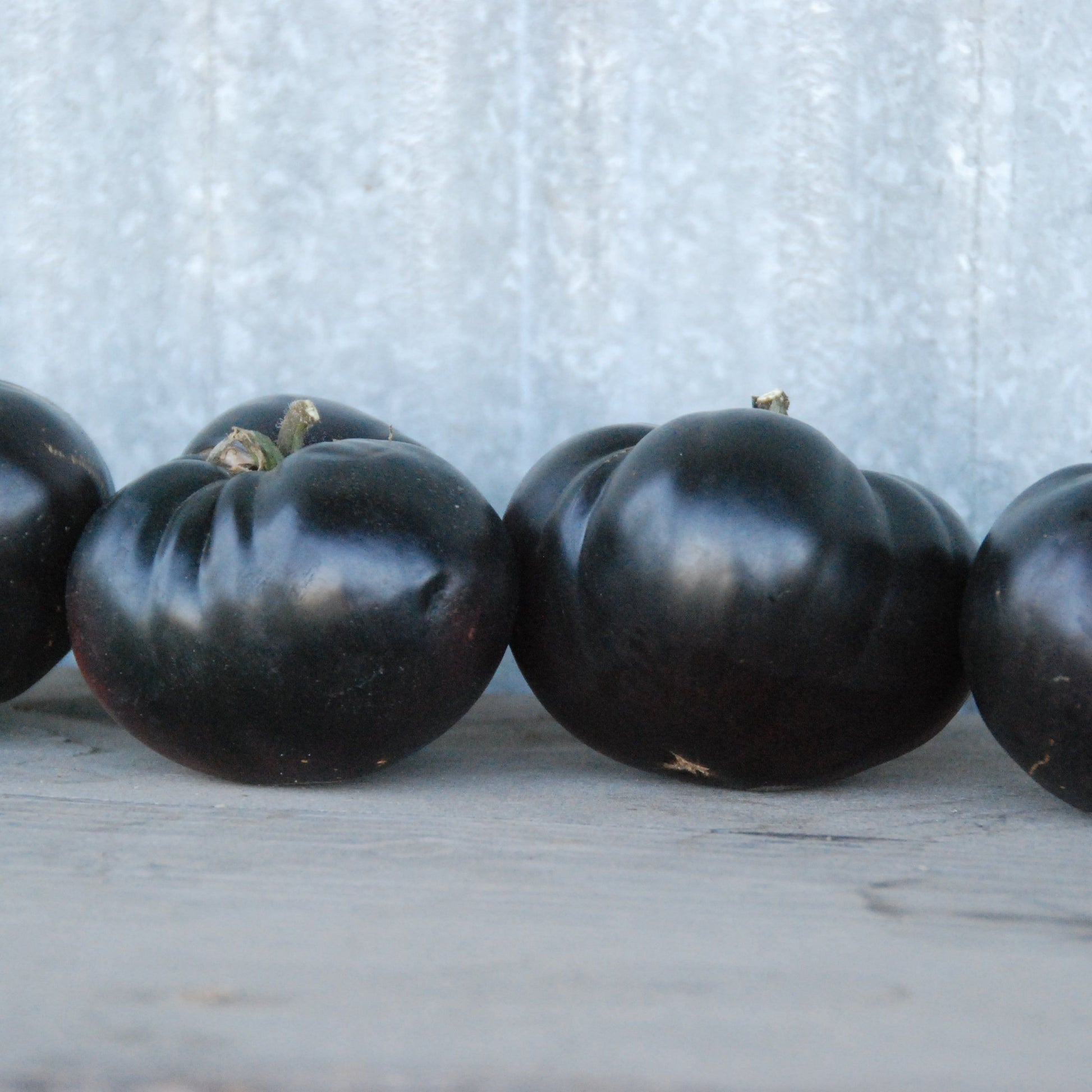
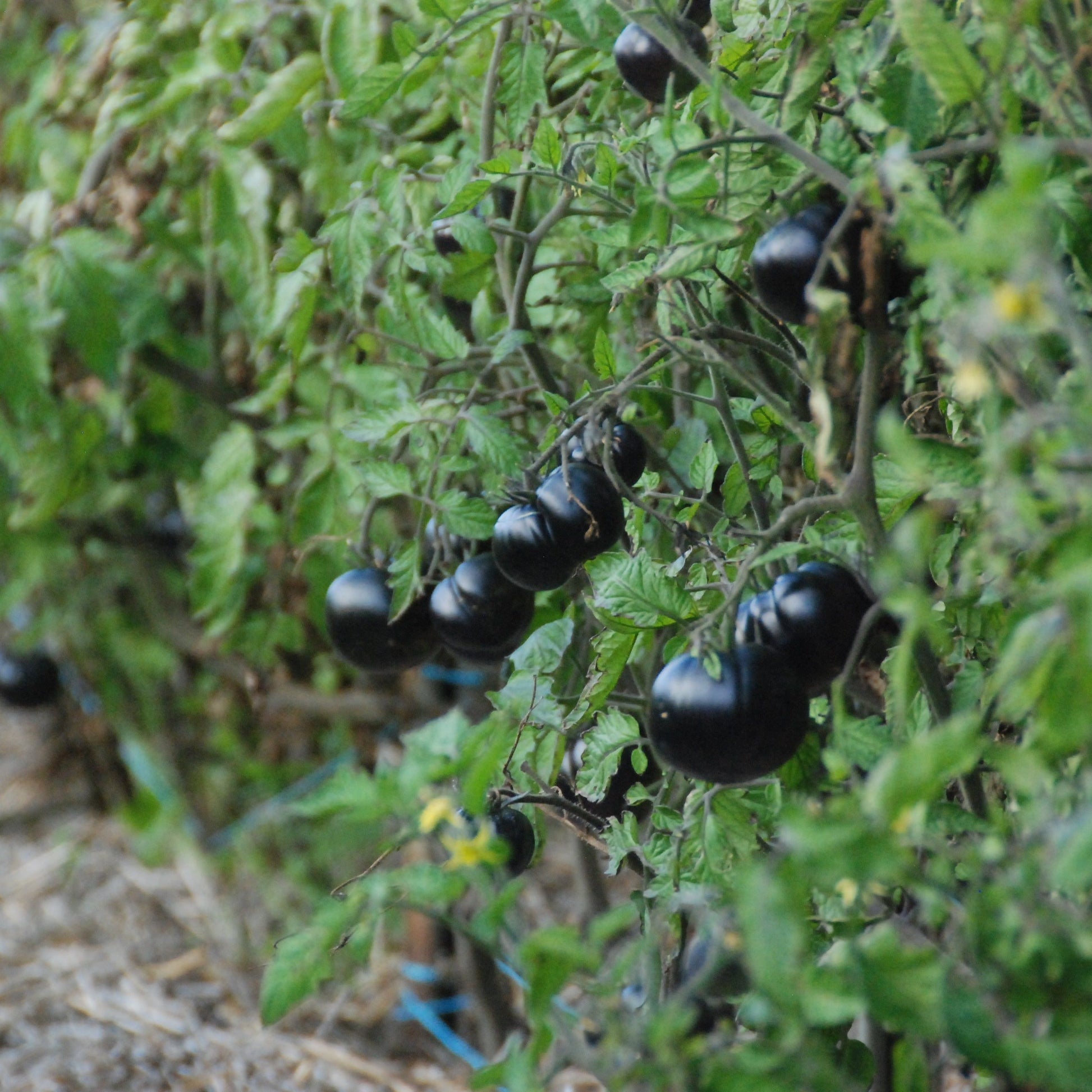
‘Black Beauty’ is the darkest skinned tomato we grow, almost completely black until ripe when it appears to have a brick red blush.
‘Black Beauty’ won our 2019 chef tomato taste test trials with one chef declaring, “Simply the best tomato I have ever tasted and the most attractive! Stunning!!” The rich, savoury flavour with an earthy bottom note is superb!
In addition to flavour and looks, this is also one of the winners in our cold season fruit set trial, setting ample fruit in cooler than average spring temperatures when many of the other larger tomatoes did not start setting fruit until the 3rd truss. We have been growing this tomato for 6 seasons, and have selected for flavour, early season fruit set, darkness in colour and resilience through into autumn, with 'Black Beauty' being one of the last tomatoes in the field each season.
Certified Demeter Biodynamic and Certified Organic Seed
SEED COUNT - 20 approx
Germination: Lot#14560 96% APR 2026
Seed Raising, Growing and Harvest Information
| Plant Type | Site | Spacing | Height | Sowing Depth |
Days to Germination |
Days to Maturity |
|---|---|---|---|---|---|---|
| Tender Annual |
Full Sun | 50cm apart in rows 60-70cm apart |
90cm-1m | 3-5mm | 5-10 days @ 21-27 degrees |
80 days |
TRANSPLANT (recommended) – Start transplants 5- 6 weeks before planting date. Sow seeds 6mm deep, 4 seeds/2.5cm. Lightly cover. Keep mix at 23-28°C. Pot up into 5cm or larger cells after first set of true leaves appear. For growing transplants, maintain temperature at around 22°C during the day and 18°C at night
Harden off plants by slightly reducing temperature to 15-18°C and reducing water for 2-3 days before transplanting.
NOTE - Don't start too early—leggy, root-bound, or flowering transplants can cause stunting and reduce early production. Avoid exposing unprotected plants to consecutive nightly temperatures below 7°C.